Couples often wait too long before they finally seek professional help. The patterns that could have been changed much earlier become ingrained through time. The ability to identify symptoms of negative relationship patterns will tell you when couples should see a therapist. There are many advantages of couples therapy, from dealing with relationship issues to strengthening your bond. Research proves that approximately 70% of couples found therapy to be effective.
Whether you are dealing with frequent conflicts, drifting apart from each other, trying to regain trust, or just want to establish a stronger bond, couples therapy can be a path to a healthier relationship. If you wonder when couples should see a therapist, continue reading to learn about relationship problems and their symptoms that require marriage counseling or couples therapy.
What Is Couples Therapy?
Couples therapy is a talk therapy that allows you to identify negative behaviour that may be affecting your relationship. This type of therapy aims to help you and your partner gain a better understanding of negative patterns within the relationship.
Couples therapy can help you overcome challenges and deepen your connection with your partner. Knowing when couples should see a therapist can be helpful for those who are on the verge of ending their relationship. It usually lasts for a short period of time, but can result in a positive transformation of the relationship in the long run.
When Couples Should See a Therapist
Understanding when couples should see a therapist means being honest about what you are noticing in your relationship. Here are the clearest indicators that professional support would help.
Communication Has Broken Down
When conversations consistently end in arguments, defensiveness, or complete shutdown, that is a sign that communication patterns have become destructive rather than connecting. Healthy disagreements involve both partners feeling heard, even when they do not agree. When that stops being the case, a therapist provides structure that helps both people speak and be understood more effectively. This is when couples should see a therapist rather than continuing the same frustrating cycle.
The Same Arguments Keep Happening
Repeating the same conflict without resolution means the real issue has not yet been identified or addressed. A therapist helps uncover what is actually driving the cycle so both partners can respond to the root rather than the symptom. If the same disagreement keeps resurfacing, this is the time when couples should see a therapist.
Emotional Distance Has Set In
When partners start feeling more like roommates than a couple, when warmth, affection, and genuine connection have faded without a clear reason, that drift is telling you something important. Emotional distance that is left unaddressed tends to widen over time rather than correct itself.
Trust Has Been Broken
Infidelity, dishonesty, or significant betrayal requires structured professional support to address meaningfully. A therapist helps you rebuild transparency and move forward in a way that does not simply bury what occurred. Situations involving broken trust are often when couples should see a therapist to begin repairing the relationship in a healthy way.
Life Transitions Are Creating Strain
New parenthood, job changes, relocation, grief, or blended family challenges can place enormous pressure on even strong relationships. These transitions often bring new expectations and stressors that couples are not equipped to navigate without support.
What Happens During Couples Therapy?
Below are the typical stages of couples therapy and what partners can expect throughout the process.
| Stage | What Typically Happens |
| Initial Sessions | Understanding concerns and relationship history |
| Goal Setting | Identifying areas that need attention |
| Skill Building | Learning communication and conflict strategies |
| Practice | Applying new approaches between sessions |
| Review | Tracking progress and adjusting goals |
| Maintenance | Strengthening long-term relationship habits |
Approaches Used in Couples Therapy
There are several approaches to couples therapy that work differently for relationship issues, but they have the same goal. They address unhealthy behaviours and patterns and make relationships fulfilling for both partners. Below are some of the techniques used in couples therapy
Gottman Method
Developed by John and Julie Gottman, it focuses on the importance of connection attempts, repairing relationship damage, and understanding each other better. Partners learn how to express affection and respect as a means of building closeness and creating “love maps” reflecting their partner’s psychological world.
Emotionally Focused Therapy (EFT)
Emotionally Focused Therapy views the restoration of a distressed couple’s physical and emotional bond as a powerful driver of change in the relationship. Drawing on attachment theory, the therapist encourages partners to access and express what lies under their anger or emotional distance. With contact restored, couples have a renewable source of mutual comfort and support.
Cognitive-behavioral Couples Therapy (CBCT)
It is an evidence-based technique to help couples experiencing relationship issues such as disengagement or high conflict. CBCT is a present-focused therapy in which couples develop skills to help them address current and potential future stressors in their relationship. It is also one of the most effective approaches used in individual therapy.
Imago Relationship Therapy
The goal of this therapy model is to help partners build the relationship they desire. Partners take turns listening and speaking, repeating or mirroring what the other says to demonstrate understanding, validating their partner’s perspective, and tapping into their feelings.
Narrative couples therapy
This therapy technique views relationship challenges as stories that can be rewritten, rather than issues that define your relationship. This modern therapy method, developed by Michael White and David Epston, helps partners step outside their conflict-heavy narratives to find new possibilities for connection. There is no blame placed on any partner as they work through their stories. The focus is to recognize and change unwanted and unhelpful stories about themselves and others.
What Are the Benefits of Couples Therapy?
After understanding when couples should see a therapist, people are often surprised that there are many couples therapy benefits.
Understand Relationship Patterns
Couples therapy helps you better understand your relationship dynamic. Do you have negative communication patterns with your partner? Do you keep disagreeing about the same issues? Looking at these negative patterns can be important in helping move your relationship in a positive direction and build a stronger bond.
Safe Space
During conflicts, both partners need a safe space to navigate difficult conversations, to be heard, to be honest, and to be vulnerable. Couples therapy provides exactly that. It gives a safe space where boundaries are set, and a neutral person oversees the process and can intervene when necessary.
See Each Other’s Perspective
Couples therapy helps both partners to really see each other’s perspectives. It’s common and normal to see a relationship through just our own lens. Understanding your partner’s point of view can help reduce misunderstandings and improve connection.
Coping Skills
Effective coping skills can not only help with immediate relationship problems, but they also serve as a roadmap for dealing with future challenges as well. Learning how to cope with difficult situations in a calm and constructive manner can help you and your partner get through these challenging times.
Restore Trust
Whether trust has been damaged by infidelity or gradually eroded by disconnection, couples therapy provides a place to explore the cause of broken trust, work on forgiveness, and create a space for new boundaries so healing can begin.
Better Communication
Couples therapy can also help improve communication skills so you can engage with your partner more effectively and productively. Better communication skills can help resolve conflicts, strengthen your relationship, and solve many other issues in the relationship.
A Shared Toolkit
Research shows that 70 to 80 percent of couples report meaningful recovery after 8 to 12 sessions of evidence-based couples therapy. The acquired skills during therapy sessions can be helpful long after the therapy ends. This particular outcome is among the biggest benefits of couples therapy available.
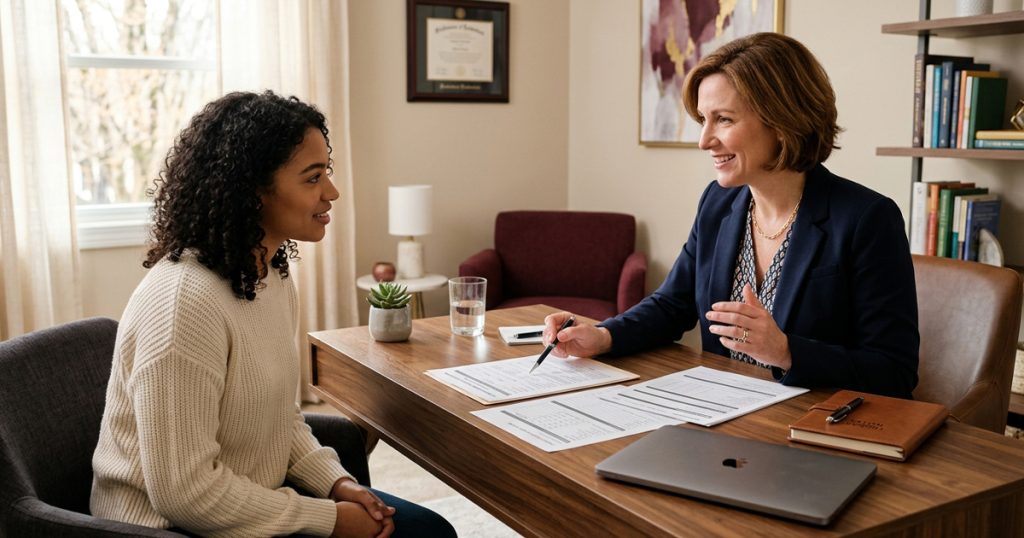
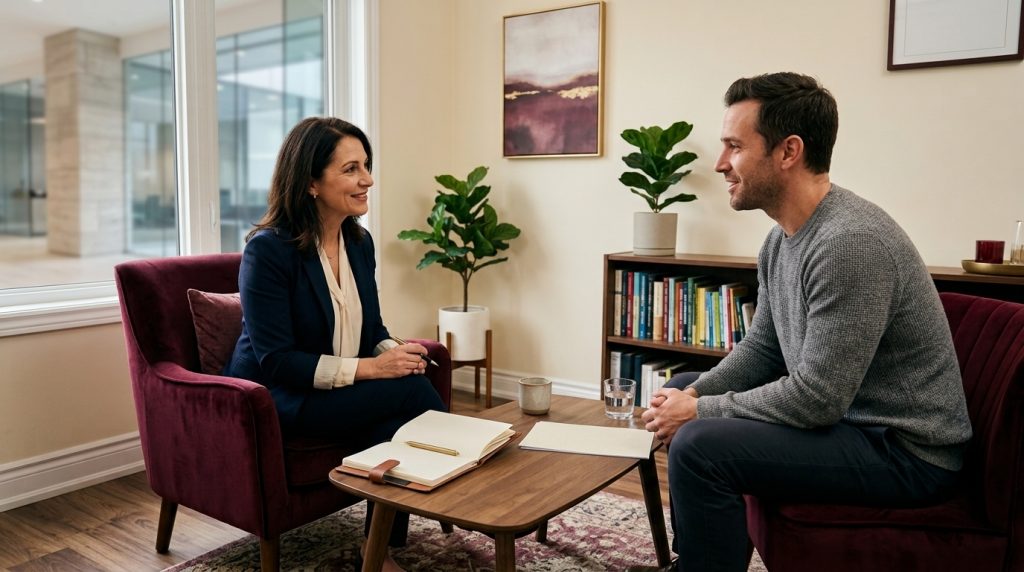
What to Expect in Your First Session
Knowing what a first session looks like removes a significant barrier to reaching out.
A Safe, Neutral Introduction
Your first session is focused on creating safety for both partners. There is no pressure to have everything figured out or to present a unified front. The therapist will ask about your relationship history, current challenges, and individual goals at a pace that feels comfortable.
Both Perspectives Matter
A skilled therapist ensures both partners feel their perspective is heard and respected. The goal is not to determine who is right. It is to understand how both people experience the relationship and what each person needs going forward.
Setting Goals Together
By the end of the first session, you will have a clearer sense of what the work might look like and whether the therapist feels like the right fit. Understanding what to expect from your first therapy session helps both partners arrive feeling prepared rather than anxious.
How to Find the Right Therapist in Ontario
Once it is decided when couples should see a therapist, the next step is finding a professional who is the right fit for both partners.
Look for Specific Training in Relational Work
Not every therapist who sees individuals is equally equipped for couples work. Look for someone with specific training in approaches like Emotionally Focused Therapy or the Gottman Method, both of which have strong research support for couples’ outcomes.
Trust the First Impression
Feeling comfortable, respected, and genuinely heard by your therapist from the beginning is not a luxury. It is a predictor of how the work will go. If the first session does not feel right for both partners, it is entirely appropriate to seek a different match. Find the right psychologist through Khayyat Psychology to start with a therapist matched to your specific relationship needs.
Consider a Psychological Assessment
For couples where one partner’s personal history or psychological profile is significantly affecting the dynamic, a psychological assessment can provide a clearer picture of what is happening and which therapeutic approach would be most effective.
Access Support Across Ontario
Couples counselling in Mississauga is available through Khayyat Psychology for families and couples in the Peel region, with both in-person and virtual options, ensuring that location is never a barrier to the right support.
Conclusion
Knowing when couples should see a therapist is something every relationship will eventually consider when dealing with relationship issues. The answer is almost always sooner than you think. The patterns that seem manageable today can become the cause of great relationship distress over time, and the tools that therapy provides are far more effective when the relationship still has warmth and willingness to work.
Dr. Khayyat & Associates Psychology Practice has been providing couples therapy virtually across Ontario, with many clients located in the Greater Toronto Area (GTA). While our focus is on helping couples affected by mental health concerns, we also work with partners on a wide range of other issues. To learn more about how couples counseling can help your relationship, schedule an appointment today.
FAQs
Q1. What Is Couples Therapy?
Couples therapy (or relationship therapy) is a talk therapy that allows partners to identify negative behaviour that may be affecting their relationship. This type of therapy helps them to gain a better understanding of negative patterns within the relationship.
Q2. When couples should see a therapist?
Couples should see a therapist when they notice that they are having constant arguments, communication issues, getting emotionally distant, there is infidelity or mistrust in the relationship, or they are on the verge of breaking up.
Q3. What are the common approaches used in couples therapy?
There are a number of therapeutic approaches for couples in distress. The most common techniques used are the Gottman Method, Emotionally Focused Therapy, Cognitive-behavioral Couples Therapy, Imago Relationship Therapy, and Narrative therapy.
Q4. How long does couples therapy take?
There is no particular length of therapy. Some couples see improvement in their relationships in a few sessions for minor issues, and couples with more severe issues require long-term support.
Q5. Where can I find a licensed therapist for couples counselling in Toronto?
Couples counselling in Mississauga, Hamilton, and Toronto is widely available with licensed practitioners. At Khayyat Psychology, Dr Selene Khosla is a registered psychotherapist(Qualifying) who helps couples work through their relationship challenges using evidence-based techniques.